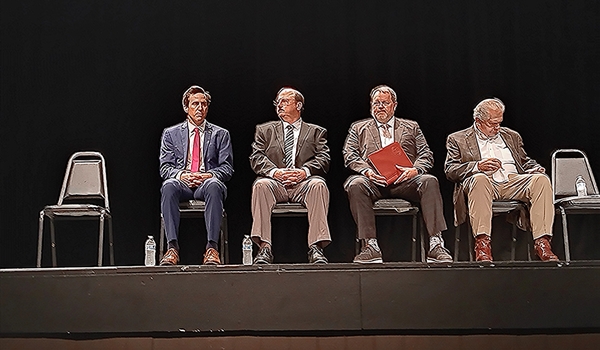
TALLADEGA, Ala. – Four state senators and representatives whose districts include Talladega County gathered at the Ritz Theater in Talladega this past week for a town hall focused on the recently completed legislative session. Rep. Barbara Boyd was invited but did not respond.
The event was co-sponsored by the three Chambers of Commerce in Talladega County. Each legislator was given a brief period to discuss their take on the legislative session. We will publish a series of stories focusing on each legislator individually.
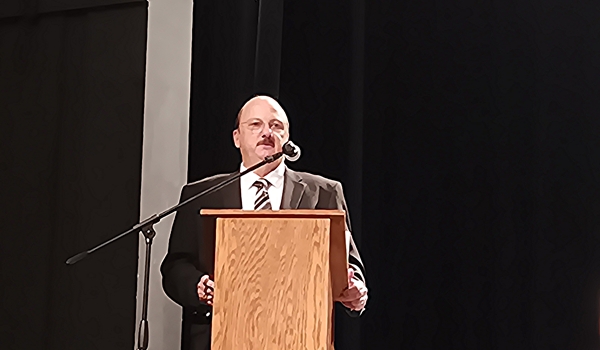
State Sen. Keith Kelly
Sen. Keith Kelly opened his remarks by focusing on the state’s two major budgets.
“We are in good shape with our budgets, both the Education Trust Fund ($10.5 billion) and General Fund Budget ($3.7 billion),” Kelly said. “Eighty-seven percent of our General Fund budget is earmarked, which doesn’t give much leeway for any other spending.”
Kelly also discussed changes resulting from the federal “Big Beautiful Bill.”
“It changes things, passing a lot of authority back to the states. We have to deal with those and the costs,” Kelly said.
Kelly said his primary focus beyond budget matters was on legislation aimed at making a difference in public safety and protections. He specifically cited several crime-related bills, including the Child Predator Death Penalty bill and stronger penalties aimed at better protecting against school bus shootings.
He also highlighted legislation addressing sex offenders.
“We strengthened registration, treatment, regulation for sex offenders, and added protections against grooming victims and removing the ability to hide behind Post Office Box addresses,” Kelly said.
Kelly also mentioned the so-called “Car Lot” bill and its consumer protections. He discussed increased accountability for members of state boards.
“We added mandatory training, so that board members understand the responsibilities and limitations of the scope of their authority,” he said.
During the question-and-answer portion of the event, Kelly addressed a question about funding for education.
“We are funding them quite well. Is that getting the job done? We are making progress on the quality of education, but things that aren’t working need to be addressed or eliminated and replaced with ideas that will make a positive difference,” Kelly said.
On the subject of Flock cameras, Kelly said the technology varies depending on the system being used.
“There are different types. Some allow quick response by law enforcement; some simply read vehicle tags. They are making a difference, especially in the area of drug and human trafficking enforcement, catching those trafficking. Balance is needed,” he said.
Answering a question about data centers, Kelly said the state needs to protect agricultural land.
“But one thing that concerns me is the abundant amount of misinformation, which makes it difficult for us all,” Kelly said. “We need to focus on making certain that bad things that have happened elsewhere don’t happen here.”
On rural health care, Kelly said the Rural Healthcare Initiative has produced several good ideas, including a nurse practitioner program designed to help address the shortage of available health care.
“A great, funded program, but it’s only a band-aid,” Kelly said. “The root issue we have to figure out is that we have an obligation, without the information needed to budget.”